
Programme at a Glance
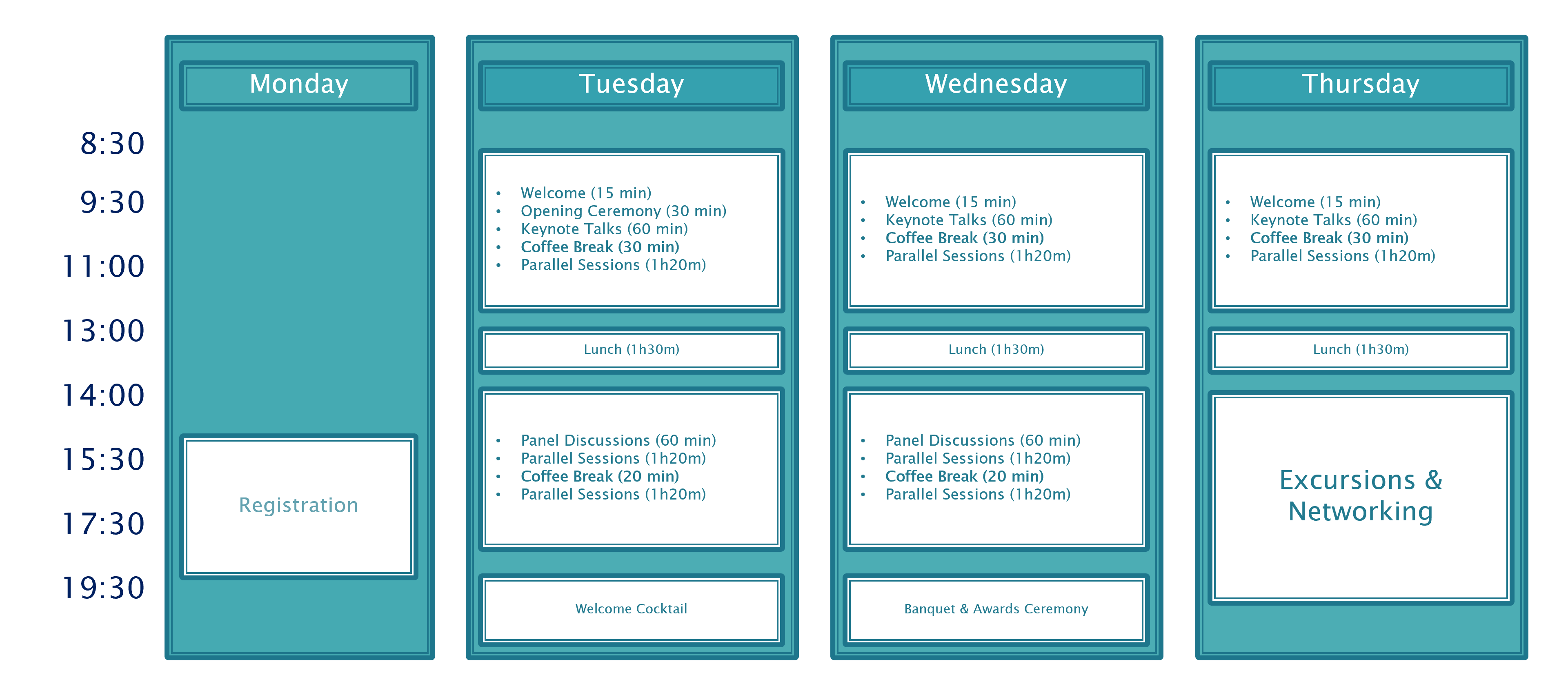
Agenda
Opening of Registration Desk
Opening of Registration Desk
Opening and Welcome
Sunrise Auditorium
Keynote Talk
Sunrise Auditorium
Keynote Talk
Sunrise Auditorium
Keynote Talk
Sunrise Auditorium

Coffee Break
Lunch Break
Keynote Talk
Sunrise Auditorium
Panel:
Accountability and Oversight in AI-Enabled Systems
Sunrise Auditorium
Moderator:
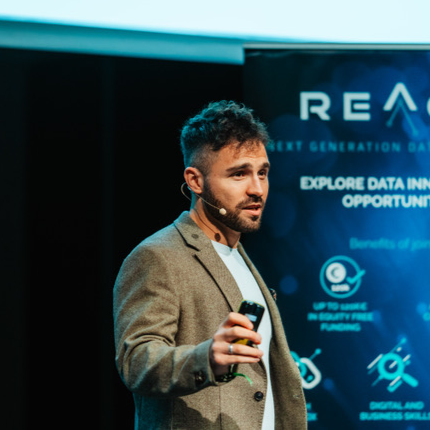
Aleksandar Zobec
Innovation and Project Manager at F6S

Andreia Rosa Collard
Director of Competitivity, Innovation and Sustainability, Government of Madeira
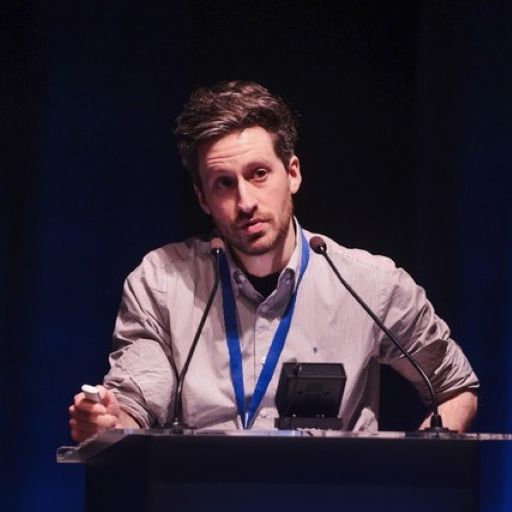
Hugo Dória
Neuroradiologist at SESARAM
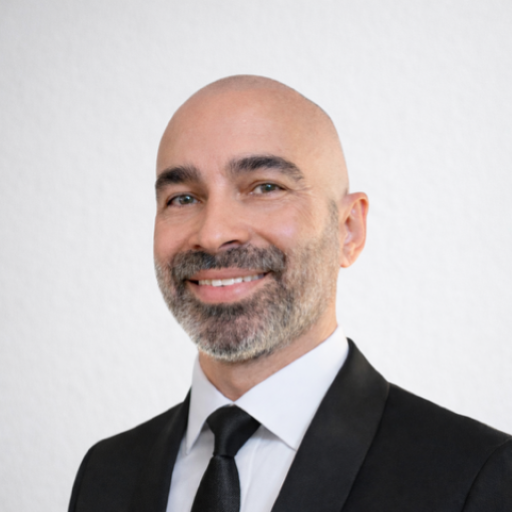
Luigi Gallo
Full Professor of Information Processing Systems at Pegaso University
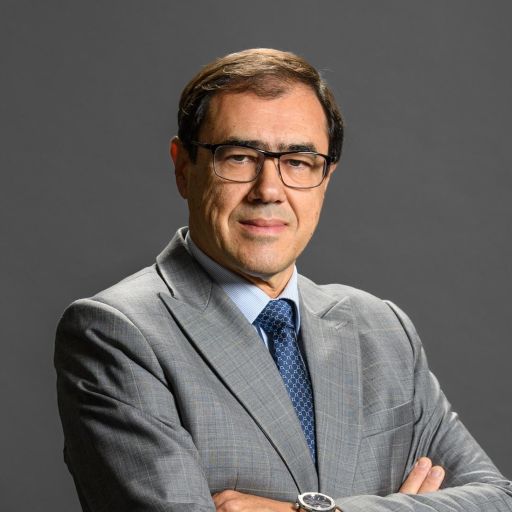
Ricardo Gonçalves
Director, UNINOVA-CTS | Full Professor, NOVA FCT
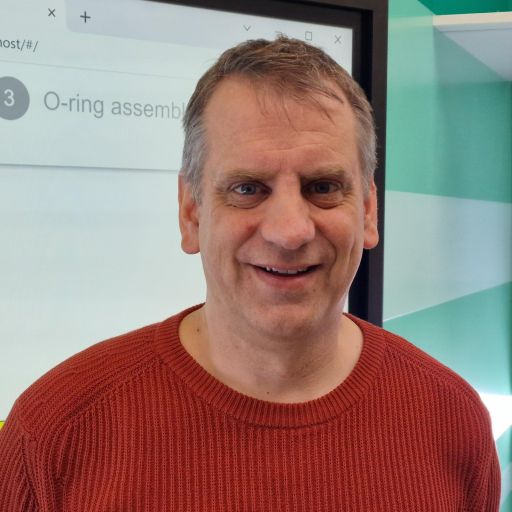
Thomas Knothe
Head of the Business Process and Factory Management department at Fraunhofer IPK
Coffee Break
End of the Day
Opening of Registration Desk
Opening and Welcome
Sunrise Auditorium

Keynote Talk
Sunrise Auditorium
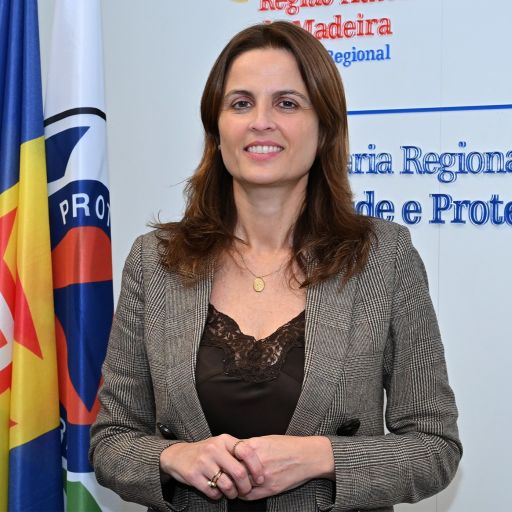
Keynote Talk
Sunrise Auditorium
Keynote Talk
Sunrise Auditorium

Coffee Break
Lunch Break
Keynote Talk
Sunrise Auditorium
Panel:
From Fragmentation to Continuity in Data Ecosystems
Sunrise Auditorium
Moderator:
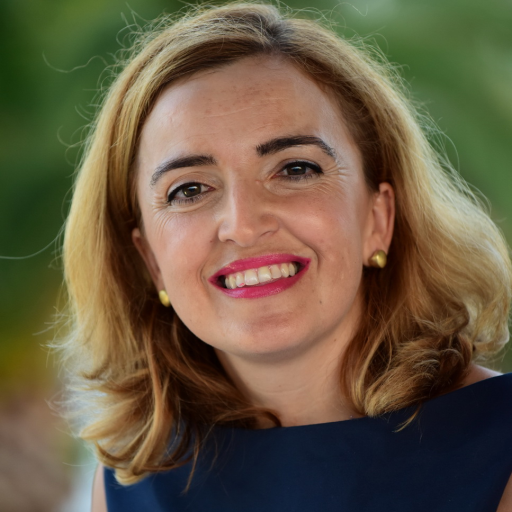
Mayte Carracedo
Co-Founder and Chief of Ecosystems and Impact at FundingBox
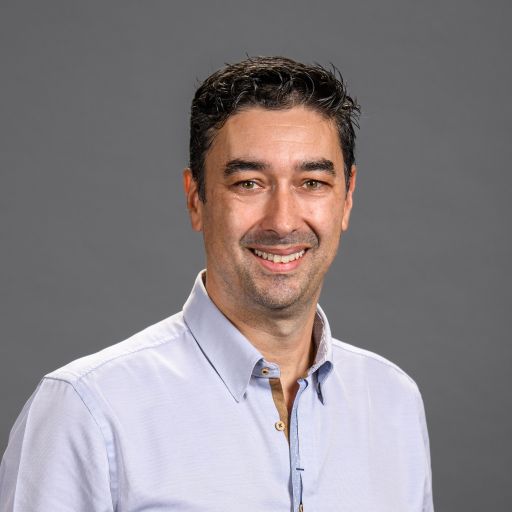
Carlos Agostinho
Principal Researcher at UNINOVA | Head of Science and Innovation at IDEA
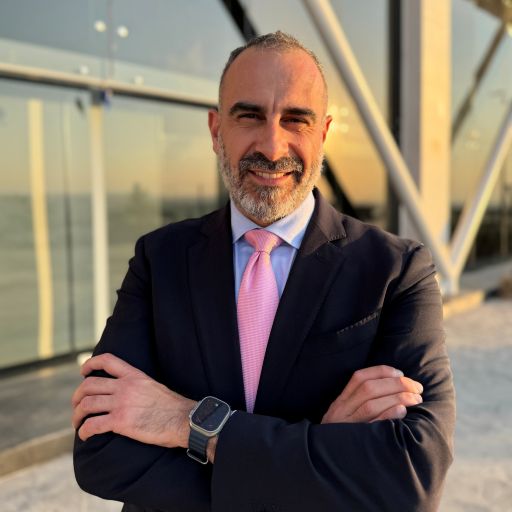
Charalampos Vassiliou
Digital Transformation and Enterprise Architecture Strategist at the European Commission's Directorate General for Health and Food Safety (DG SANTE)
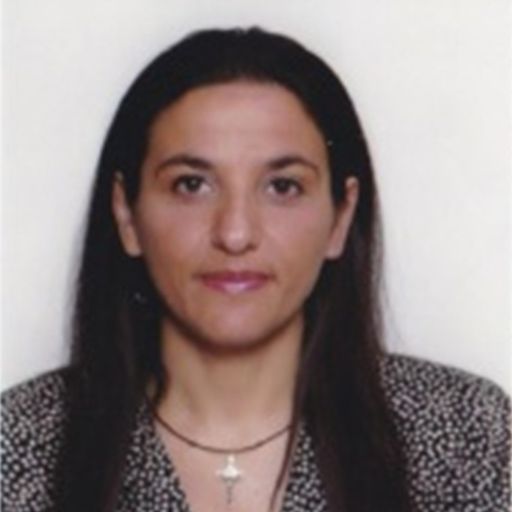
Giuseppina Lauritano
Health and Digital Executive Agency (HaDEA) - European Commission
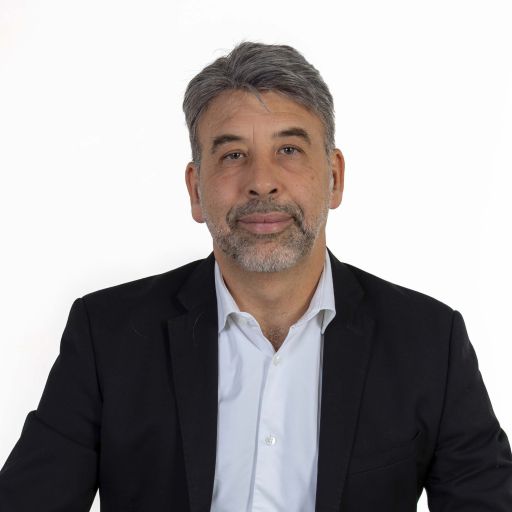
Orfeu Flores
Founder and CEO of STABVIDA
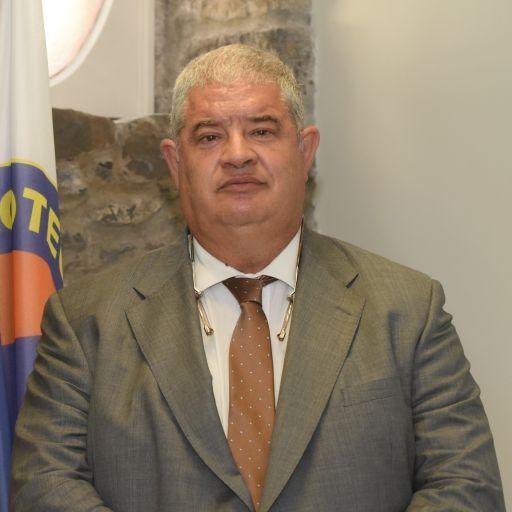
Pedro Ramos
President of the Mission Structure for the Madeira Central and University Hospital
Coffee Break
End of the Day
Opening of Registration Desk
Opening and Welcome
Sunrise Auditorium

Keynote Talk
Sunrise Auditorium
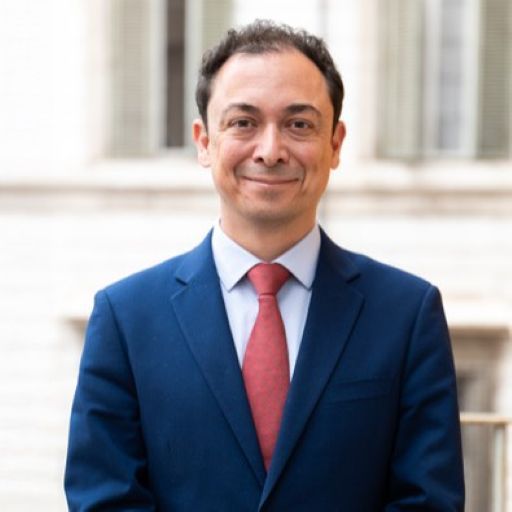
Keynote Talk
Sunrise Auditorium
Keynote Talk
Sunrise Auditorium

Coffee Break
Lunch Break
Keynote Talk
Sunrise Auditorium
Panel:
Building Capabilities for Sustainable Digital Systems
Sunrise Auditorium
Moderator:

Thomas Vyzikas
Head of Sector, Marie Skłodowska-Curie Actions, European Research Executive Agency
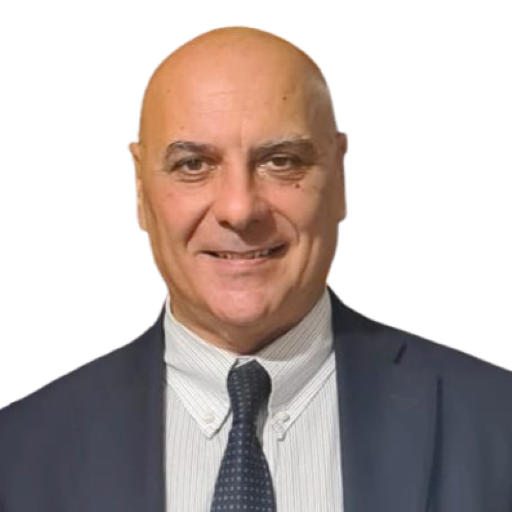
Giuseppe De Pietro
Full Professor of Artificial Intelligence and Director of the Department of Information Sciences and Technologies at Pegaso University
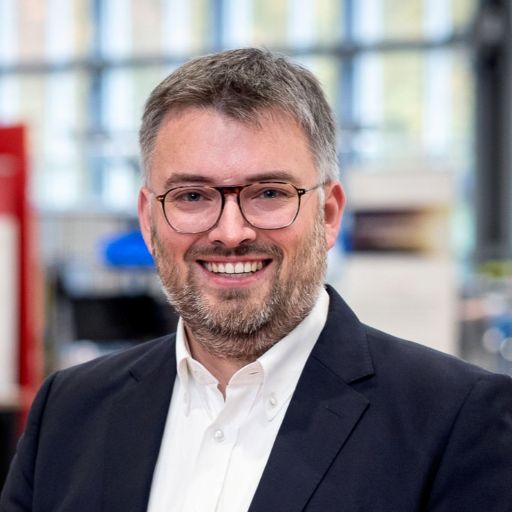
Moritz von Stietencron
Senior Research Associate at BIBA
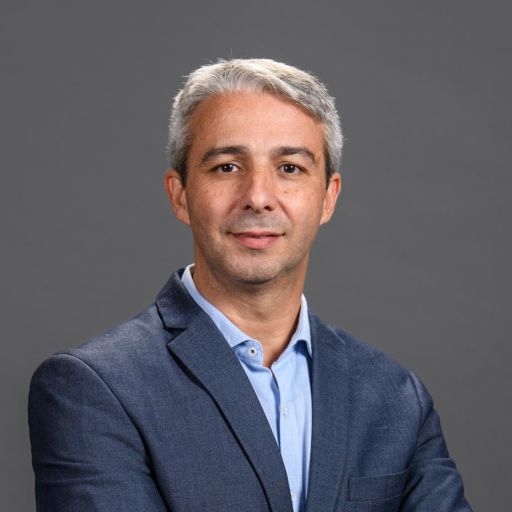
Pedro Pereira
Assistant Professor at NOVA School of Science and Technology
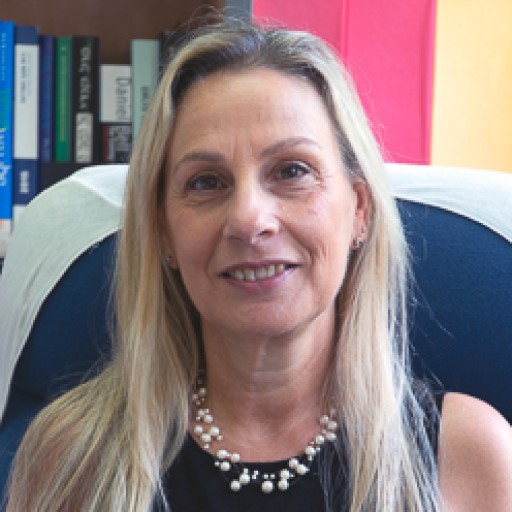
Tal Soffer
Director of Technology and Society Foresight Unit and the Web Supported Academic Instruction Center, Tel Aviv University
Coffee Break
End of the Day
Main Panels
Tuesday, 14 April, 14h30 - Sunrise Auditorium
As artificial intelligence becomes increasingly integrated into public services, industry operations, and digital infrastructures, establishing effective mechanisms for accountability and oversight is critical to ensuring trust, fairness, and societal benefit. This panel brings together expert voices from policy, research, industry, and civil society to explore how AI-enabled systems can be governed responsibly, from ethical design and transparent decision-making to regulatory frameworks and practical oversight strategies. Topics will include the role of human and organisational accountability in AI deployment, the challenges of auditing and monitoring complex automated systems, and emerging best practices for governance that balance innovation with protection of rights and public interests.
Moderator:
Panelists:
- Andreia Rosa Collard, Director of Competitivity, Innovation and Sustainability, Government of Madeira
- Hugo Dória, Neuroradiologist at SESARAM
- Luigi Gallo, Full Professor of Information Processing Systems at Pegaso University
- Ricardo Gonçalves, Director, UNINOVA-CTS & Full Professor, NOVA FCT
- Thomas Knothe, Head of the Business Process and Factory Management department at Fraunhofer IPK
Wednesday, 15 April, 14h30 - Sunrise Auditorium
Despite decades of digital transformation, data remains fragmented across systems, institutions, and sectors. Technical incompatibilities, legacy infrastructures, organisational boundaries, and misaligned incentives continue to reinforce silos that limit collaboration, reduce efficiency, and constrain innovation. This panel will discuss the real-world consequences of fragmented data environments, from duplicated efforts and incomplete insights to reduced public value and missed economic opportunities. Beyond diagnosing the problem, the session will explore the transformative potential of continuity in data ecosystems. Removing structural barriers to data sharing can enable new forms of coordination, smarter decision-making, and cross-sector innovation. Grounded in practice and policy, this panel brings together experts who work directly with the structural and strategic challenges of data siloing to rethink how data ecosystems can evolve from fragmented architectures into continuous systems that unlock collective value.
Moderator:
Panelists:
- Carlos Agostinho, Principal Researcher at UNINOVA & Head of Science and Innovation at IDEA
- Charalampos Vassiliou, Digital Transformation and Enterprise Architecture Strategist at the European Commission's Directorate General for Health and Food Safety (DG SANTE)
- Giuseppina Lauritano, Health and Digital Executive Agency (HaDEA) - European Commission
- Orfeu Flores, Founder and CEO of STABVIDA
- Pedro Ramos, President of the Mission Structure for the Madeira Central and University Hospital
Thursday, 16 April, 14h30 - Sunrise Auditorium
Digital systems underpin essential services, public administration, business operations, and social interaction. Yet many digital initiatives struggle to generate lasting value because organisations lack the capabilities required to maintain, govern, and evolve them over time. Without sustained institutional capacity, even well-designed systems risk stagnation or decline. This panel will examine the institutional, organisational, and human capacities needed to support digital systems beyond their initial rollout. The discussion will address skills development, governance models, cross-sector collaboration, and the long-term stewardship of digital assets. Rather than concentrating solely on innovation and deployment, the session will explore what it takes to operate, adapt, and continuously improve digital systems in complex and changing environments. It will emphasise capacity building, knowledge retention, and strategic alignment as foundations for ensuring that digital investments deliver durable impact. By shifting the focus from short-term implementation to long-term capability, the panel reframes sustainability as a matter of preparedness, accountability, and resilience in digital transformation.
Moderator:
Panelists:
- Giuseppe De Pietro, Full Professor of Artificial Intelligence and Director of the Department of Information Sciences and Technologies at Pegaso University
- Moritz von Stietencron, Senior Research Associate at BIBA
- Pedro Pereira, Assistant Professor at NOVA School of Science and Technology
- Tal Soffer, Director of Technology and Society Foresight Unit and the Web Supported Academic Instruction Center, Tel Aviv University
Papers Regular Sessions
Tuesday, 14 April, 11h - Sunset I
Chairs
Papers
- ID 8: Roberto Santos, Alexandre Ramos, Pedro Malo; Compliance Maturity and ESG Interoperability Networks: A Governance-Driven Framework for Sustainable Organizations
- ID 10: Grigorios Tzionis, Georgia Kougka, Ilias Gialampoukidis, Stefanos Vrochidis, Ioannis Kompatsiaris, Maro Vlachopoulou; Hierarchical Framework for Digital Product Passports
- ID 13: Ferdaous Kessaissia, Linda Elmhadhbi, Vincent Cheutet, Lilia Gzara; Improving Organizational Interoperability in Industry: An Evaluation Method
- ID 25: Luiza-Elena Burlacu, Aurelia-Mihaela Bodeanu, Mircea Segarceanu, Eugen Pop, Ioan Sacala, Mihnea-Alexandru Moisescu; Intelligent Integrated System for Personalized Diabetes Management
Tuesday, 14 April, 15h - Lagoon I
Chairs
Papers
- ID 9: Simon Wilbers, Ron van de Sand, Bastian Prell, Jörg Reiff-Stephan; An Agentic Recommender System Architecture for Interoperable Enterprise Knowledge Management
- ID 17: Miguel Casali, Andres Boza, Francisco Fraile, Raul Poler; LLM-Based Agents and Digital Twins: Patterns, Interoperability Challenges, and Multi-Organisational Collaboration
- ID 21: Atheer Alshaggah, Allal Chafi, Jalal Possik, Laurent Peyrodie; An Interoperable Digital Twin Framework for Managing Indoor Air Quality Variables: A Case Study in University Classrooms
- ID 23: Abdelhadi Belfadel, Thomas Hassan, Achraf Kallel; A Semantic Approach for Digital Twin Cross-Platform Interoperability: Challenges and Resolutions in AAS Data Integration
- ID 24: Michel El Haddad, Jalal Possik, Marco Gotelli, Charles Yaacoub; A Data-Driven Architecture for an Electric Arc Furnace: Interoperable ROM-Based Simulation for Steelmaking
Tuesday, 14 April, 16h40 - Sunset I
Chairs
- Ioan Sacala, UPB
- Gash Bhullar, Control 2K Limited
Papers
- ID 16: Miruna Vlasceanu, Constantin-Dan Paraschiv, Iulia-Mihaela Decu, Ioan Sacala, Joao Sarraipa; An Interoperable Control Model for Emergency Vehicle Priority and Urban Congestion Reduction
- ID 22: Leonardo Daou, Eva Petitdemange, Gregory Zacharewicz, Séverine Durieux, Nicolas Daclin; A Novel AI-Driven System Architecture for Federated Interoperability
- ID 27: Paula Morella; Standardizing Machine Data for Semantic Interoperability: An OPC UA-Based Approach in Bearing Manufacturing
- ID 33: Diana Ricaurte, Nicolas Daclin, Gregory Zacharewicz; AI-based Solutions for Cyber-Physical Systems Interoperability: Understanding their Scope
- ID 14: Fernando Navarro Parets, Adriana Hofmann, Claudio Sassanelli; Investigating the role of the sustainability manager related to Circular Economy in Europe
Wednesday, 15 April, 11h - Sunset I
Chairs
- Ilaria Pietrangeli, Università Politecnica delle Marche
- Mateo Del Gallo, Università Politecnica delle Marche
- Jalal Possik, Interop Vlab
Papers
- ID 12: Frank-Walter Jaekel, Patrick Gering, Matthias Hornberger; Challenges and opportunities of internal control systems in context of interoperability - a case study
- ID 18: Ioanna Kapetanidou, Christos Diamantakis, Alexandros Nizamis, Mihnea-Ionut Lopataru, Gabriel-Mihail Danciu, Cosmin-Septimiu Nechifor, Usman Wajid, Konstantinos Votis; An Object Space for Secure and Sovereign Sharing of Reusable Code Objects
- ID 26: Nuno Soares; Semantic Interoperability Architecture for Indicator-Driven Climate Urban Digital Twins
- ID 11: Nicolas Figay, Parisa Ghodous; Semantic Cartography: Enabling Evolutionary PLM - Interoperability in Sovereign Data Space
Papers Workshops
Tuesday, 14 April, 15h and 16h40 - Lagoon III
AI Agents, Cloud Marketplaces, and Data Spaces for Agile and Trustworthy Manufacturing Collaboration
This workshop explores how interoperable architectures, AI agents, and data-sovereign infrastructures can enable Manufacturing-as-a-Service (MaaS) ecosystems at scale. Building on recent advances in multi-agent systems, explainable and generative AI, cloud marketplaces, and semantic data spaces, the workshop addresses how manufacturing services can be discovered, negotiated, orchestrated, and trusted across heterogeneous enterprise and shop-floor systems.
The workshop combines peer-reviewed paper presentations with interactive discussion and hands-on sessions, fostering exchange between researchers and practitioners. Key topics include interoperable MaaS marketplaces, provider-consumer AI agents, semantic interoperability, secure data exchange, edge-cloud orchestration, and benchmarking methods for trust, flexibility, and performance
Chairs
- Ruben Costa, UNINOVA, Portugal
- Georgia Apostolou, CERTH, Greece
- Ilias Gialampoukidis, CERTH, Greece
- Miguel Angel Mateo-Casali, UPV, Spain
- Raul Poler, UPV, Spain
Papers:
- ID 28: Mateo Del Gallo, Beatriz Andres, Ana Mengual Recuerda, Filippo Emanuele Ciarapica; A bibliometric analysis of AI applied to Manufacturing as a Service environments
- ID 29: Giovanni Mazzuto, Ilaria Pietrangeli, Filippo Emanuele Ciarapica, Maurizio Bevilacqua; Supply chain modelling and simulation gap: a literature review analysis
- ID 34: Grigorios Tzionis, Dimitrios Karamouslis, Georgia Kougka, Georgia Apostolou, Ilias Gialampoukidis, Stefanos Vrochidis, Ioannis Kompatsiaris; Decentralized Trust and Interoperability for Manufacturing as a Service: The MaaSAI Data Fabric
- ID 35: Grigorios Tzionis, Miguel Angel Mateo Casali, Anh Dao, Georgia Kougka, Georgia Apostolou, Ilias Gialampoukidis, Stefanos Vrochidis, Ioannis Kompatsiaris, Maro Vlachopoulou; The Machine Passport - Enabling a Sustainable and Circular Industrial Equipment Lifecycle
- ID 44: André Grilo, Luis Lourenço, Bruno Rêga, Carlos Agostinho, Ricardo Goncalves; A Unified Data Staging Area for Integrated Analytics
- ID 47: Athanasios Papanikolaou, Stamatia Rizou, Nikolaos Monios, Evgenia Kappassa, Marios Touloupos; Blockchain-Based Traceability for a Manufacturing-as-a-Service Ecosystem
- ID 53: Luis Lourenço, Marina Case, Ruben Costa, André Grilo, Bruno Rêga, Ricardo Goncalves; Design of Point-to-Point Secure Messaging for MaaSAI
- ID 55: Sebastian Pena Serna, Samuel Olaiya Afolaranmi, Grigorios Tzionis, Prodromos Mouratidis, Artemis Lavasa, Marios Kotoulas, Paco Santacatalina Marti, Andy J. Figueroa, Miguel Angel Mateo Casali , Georgia Apostolou, Ilias Gialampoukidis, Stefanos Vrochidis, José Martinez-Lastra, Raul Poler; An agentic platform for unlocking the potential behind Manufacturing as a Service
- ID 56: Samuel Olaiya Afolaranmi, Mahboob Elahi, Héctor Martín, Ruben Costa, Francesco Esposti, José Martinez-Lastra; A Unified Framework for Implementing Digital Manufacturing Solutions in a Manufacturing-as-a-Service (MaaS) Ecosystem
Wednesday, 15 April, 11h and 15h - Lagoon III
Smart Manufacturing Networks (SMNs) to Support the Industrial Resilience
This workshop focuses on supply chain resilience in Manufacturing-as-a-Service (MaaS) environments, addressing how manufacturing networks can dynamically adapt to disruptions and uncertainty. It explores technologies, innovative solutions, and research that enable agile and resilient responses to both large-scale crises—such as pandemics, natural disasters, or geopolitical conflicts—and localized disruptions, including supply delays, machine failures, and operational bottlenecks.
A central theme of the workshop is the role of Smart Manufacturing Networks (SMNs): connected and coordinated industrial ecosystems that integrate programmable MaaS capabilities to enhance visibility, control, and adaptability across production networks. Through peer-reviewed paper presentations, industrial case studies, and a panel discussion involving academia and industry, the workshop will examine strategies for proactive disruption management and continuity of operations.
The workshop aims to bring together researchers and practitioners through paper presentations sharing insights, discuss challenges, and identify future research directions for resilient, service-oriented manufacturing systems.
Chairs
- María José Núñez, AIDIMME, Spain
- Franco Chiriacò, Politecnico di Milano, Italy
- Sergio Gusmeroli, Politecnico di Milano, Italy
- Michael (Mike) Papazoglou, SERVTECH, Germany
- Amal Elgammal, SERVTECH, Germany
- Fernando Gigante, AIDIMME, Spain
Agenda Slot I:
Wednesday, 15 April, 11h - Lagoon III
- Who is who - Maria Jose Núñez
- Opening - Anna Puig Centelles, PO NARRATE
- ID 38: Amal Elgammal, Fernando Gigante Valencia, Adrián Aniorte Martínez, Mira Raheem, Maria Jose Núñez, Ángel Marcos Vicente, Michael Papazoglou; Blueprinting Sustainability in MaaS: Semantic Digital Twins for Smart Manufacturing Networks
- ID 40: Navid Sahebjamnia; Building Resilient Manufacturing Networks: Assessing Multi-Dimensional Loss Under Competing Resilience Strategies
- ID 57: Maria Jose Núñez, Thomas Knothe, Marija Jankovic; An ISO 11354 based interoperability research guidance for interoperability projects
- ID 39: Fernando Gigante Valencia, Frank Werner, Maria Jose Núñez, Jens Schimmelpfennig; Risk Identification and Monitoring in the Context of Additive Manufacturing Domain
- Q&A
Agenda Slot II:
Wednesday, 15 April, 15h - Lagoon III
- Intro MAASIVE - Franco Chiriacò
- ID 61: Maryiam Darma, Dr. Michael Hess; Supply chain predictive twin & tracking process cost of CRMs
- ID 31: Miguel Angel Mateo Casali, Grigorios Tzionis, Sebastian Pena Serna, Javier A. Cuartas, Andres Boza, Llanos Cuenca, Laura Moya-Ruiz, Francisco Fraile, Georgia Apostolou, Ilias Gialampoukidis, Stefanos Vrochidis, Raul Poler; A reference architecture for agile manufacturing as a service
- ID 41: Lucía Gálvez del Postigo Gallego; From Concept to Deployment: A Resilient Smart Manufacturing Platform for Manufacturing-as-a-Service
- ID 51: Christoph Nützel, Volkher Onuseit, Marco Cinelli, Constantin Zenz, Haim Touitou, Yao Ren, Ivan Moretti, Piergiuseppe Gianotti, Tobias Hohmann, Antonio Castelo, Franco Donati, Jakob Neuhauser, Andreas Otto, Tobias Florian, Laszlo Vörös, Pasquale Franciosa; Case Study: Servitisation as the Driver for Supply Chain Resilience – Enabled by Multi-Level Interoperability in the Lasers4MaaS Platform
- Q&A
- Panel discussion
Thursday, 16 April, 11h and 15h - Sunset I
From Data Interoperability to Data Sovereignty for a twin transition of Manufacturing Industry
Data Economy and Circular Economy are two of the major innovation trends in these recent years, providing an original interpretation of the so called twin transition of the European Manufacturing Industry. On the one side Data Economy aims at the valorisation (and in certain cases also monetisation) of the Data produced along a manufacturing value chain, paving the way towards cross-company collaboration and interoperability and enabling advanced AI applications. On the other side Circular Economy aims at the sustainability of the Manufacturing industries, through the implementation of 9R virtuous circles such as for instance Re-use, Re-pair, Re-furbish, Re-manufacturing, Re-cycling. The Workshop aims at discussing how recent technology developments such as Data Spaces and Digital Product Passports can create the infrastructure where Data and Circular Economy could symbiotically flourish and provide competitive advantage for European Manufacturing Industries, and SMEs in particular.
Chairs
Papers:
- ID 36: Themis Kavour, Georgia Kougka, Grigorios Tzionis, Dimitrios Karamouslis, Ilias Gialampoukidis, Stefanos Vrochidis, Ioannis Kompatsiaris; Digital Product Passports for Circular Wood Construction: A Semantic Graph-Based Architecture and AI-Enhanced Services
- ID 37: Martin Perau, Patrick Soenke, Holger Berg, Fabian Maus; Scaling mechanisms for practical use of data spaces by SMEs – a case study of the Furniture-X Initiative
- ID 42: Viola Gallina, Daniel Bachlechner, Michael Rader, Sebastian Schlund; Minimum Viable Circular Ecosystem Enabled by the Digital Product Passport Implemented through Data Spaces
- ID 43: Marc Haller, Maximilian Kühn; Towards Interoperable Digital Product Passports: Introducing the FA³ST Approach for DPP4.0 Validation
- ID 46: Carlos Schmidt, Friedrich Volz, Vahe Gevorgyan, Ljiljana Stojanovic; Bridging Complexity: A User-Friendly Approach for Asset Administration Shell Integration into Data Spaces
- ID 50: Alexandros Nizamis, Panagiotis Gkonis, Dimosthenis Ioannidis, Panagiotis Trakadas; Towards Active Industrial Reasoning (AIR): A Multi-Agent RAG Framework for Proactive Product Recovery within Manufacturing Data Spaces
- ID 52: Charalampos Georgiadis, Angeliki Zacharaki, Marcelo Ambrosio, Julien Adelberger, Dimosthenis Ioannidis, Dimitrios Tzovaras; From Ecosystem-Level Governance to Product-Level Traceability: Integrating Digital Product Passports within European Data Spaces for Circular PV Manufacturing
- ID 54: Matthias Prellwitz, Anna Maria Elert, Claudia Koch; Fostering Circular Manufacturing through Digital Product Passports and Quality Infrastructure: A Trust-anchored Ecosystem
- ID 59: Nikos Kefalakis, Christos Stavrogiannis, Konstantina Papachristopoulou, John Soldatos, Luca Bernini, Chiara Cimino, Paolo Albertelli, Monica Ruiu, Marco Volpini, Carlo Aliprandi, Stefano Borgia, Eric Chiquito, Ulf Bodin, Alessandra Bruno; A Sovereign Data Space and Digital Product Passport Architecture for Circular Remanufacturing: The RemaNet Approach
- ID 71: Jorge Calado, Fernado Gigante Valencia, Maria Jose Núñez, João Gião, José Ferreira; Enabling Interoperability and Data Sovereignty in the Furniture Sector through a Common Data Space
- Andra Tanase - Dataspace Data Share: The practical experience of the DS2 Project and key take-aways for the future of this technology
Wednesday, 15 April, 16h40 - Sunset I
Valorizing innovating ideas: winning proposals from CERES Hackathons
This workshop showcases the outcomes of an international Circular Economy hackathon journey carried out across multiple European countries, bringing together students, researchers, industry professionals, and companies to co-create solutions for real industrial challenges. It highlights how cross-sector collaboration, skills development, and education can drive sustainable industrial transformation in line with the twin green and digital transition.
Through selected paper contributions, invited talks, and interactive discussion, the workshop will present methodologies, key results, and lessons learned from the CERES hackathons, illustrating how challenge-based innovation and hackathon-driven ecosystems can act as catalysts for circular, resilient, and skills-oriented industrial systems.
Chairs
Wednesday, 15 April, 15h and 16h40 - Lagoon II
Exploring Opportunities and Challenges from Business Process to Simulation Models
This workshop explores how agentic AI systems can enable the automated generation and adaptation of industrial models when supported by robust interoperability frameworks. Focusing on the Asset Administration Shell (AAS) as a standardized foundation, the workshop examines how AI agents can access, interpret, and reason over structured asset and process data to generate business process and simulation models.
Through invited paper presentations, interactive demonstrations, and moderated discussion, participants will explore architectures for AAS-enabled AI agents, hands-on modelling examples, and key technical and ethical challenges, including transparency, trust, scalability, and human oversight. The workshop brings together researchers and practitioners to shape a shared vision for next-generation, AI-driven industrial modelling.
Chairs
Papers:
- ID 45: Mauro Fabrizioli, Gioele Vuaran, Alessandro Liani; AI-based Visual Inspection Techniques for 100% In-Line Quality Control of Coffee Capsule Assembly
- ID 69: Marco Franke, Robert Hellbach, Karl Hribernik, Klaus-Dieter Thoben; AI-Based Derivation and Application of Transformation Rules for Generating SSN-Based AAS Submodels
- ID 73: Enno Mueller; Provisioning and Management of a discrete-event simulation library through the Asset Administration Shell for AI Agents
Thursday, 16 April, 15h - Lagoon II
Synergies for Decarbonising Energy-Intensive Manufacturing
This workshop brings together European research and industrial communities to explore how circular economy strategies, digital transformation, and low-emission technologies can jointly enable deep decarbonisation of energy-intensive industries. Focusing on sectors such as steelmaking, glass, and concrete recycling, the workshop highlights integrated pathways that combine material circularity, advanced heating technologies, and data-driven process optimisation.
Through project-driven presentations, selected paper contributions, and interactive discussion, participants will examine innovative solutions for scrap valorisation, impurity management, electrification, and hydrogen-based processes, as well as the role of digital tools in real-time optimisation and cross-sector knowledge transfer. The workshop aims to foster collaboration and identify scalable, interoperable solutions for climate-neutral industrial systems.
Chairs
Thursday, 16 April, 11h - Lagoon III
Light weight and Flexible Interoperability Architectures, Approaches and Applications for Highly Challenging Environments
This workshop focuses on interoperability solutions for highly challenging and mission-critical environments, where conditions are volatile, resources are constrained, and failure is not an option. Typical application domains include disaster response, civil security, critical infrastructures, and remote operations.
The workshop highlights lightweight, flexible, and mission-ready interoperability architectures capable of operating across heterogeneous legacy systems and unstable communication networks. Through selected paper presentations, an invited impulse talk, and interactive discussion, participants will exchange practical solution patterns, reference architectures, and lessons learned from real deployments. The workshop aims to foster cross-domain collaboration and identify robust interoperability approaches suitable for resilient, real-world operational contexts.
Chairs
Papers:
- ID 65: Moritz von Stietencron, Marco Franke, Amir Azimian, Johannes Gust, Marco Lewandowski, Karl Hribernik; Decentralised Dataspaces for Disrupted Networks: An Architecture for Mission-Ready Interoperability in Disaster Response
- ID 72: Marco Lewandowski; Unified Namespace (UNS) for Cross-Organizational Operational Data Exchange in Disaster Response: A Conceptual Architecture
- ID 75: Konstantin Klein, Marco Franke, Karthik Shenoy Panambur, Klaus-Dieter Thoben; A Local Data Space Architecture for Semantic Data Interoperability in Industry 4.0 Manufacturing Environments
Tuesday, 14 April, 11h - Lagoon III
AI-Driven Knowledge Formalisation, Ontology Engineering and Human-in-the-Loop LLMs for Enterprise Interoperability
This workshop explores how AI-driven knowledge formalisation, ontology engineering, and human-in-the-loop Large Language Models (LLMs) can enable trustworthy and interoperable enterprise knowledge services. Addressing current challenges such as fragmented semantics and limited reuse of expert knowledge, the workshop examines integrated approaches to capture, structure, and operationalise industrial knowledge across organisational boundaries.
Through invited paper contributions, impulse talks, and interactive discussion, participants will explore the role of knowledge graphs, semantic retrieval, and LLM-supported curation workflows in bridging human expertise and intelligent systems. The workshop brings together researchers and practitioners to discuss adoption challenges, identify open research questions, and shape future directions for AI-enabled enterprise interoperability.
Chairs
- Matteo D'Auria, SPINDOX, Italy
- Dimitrios Spatharakis, NTUA, Greece
- Massimo Goletti, MUSP, Italy
- Régis Hamelin, BLUMORPHO, France
Papers:
- ID 48: Giulia Marchello, Giuliano Squarcina, Matteo D'Auria, Sabrina Bassetto; A Multi-Ontology Knowledge Graph Framework with Ontology-Aware LLM Interaction and Human-in-the-Loop Validation
- ID 49: Lydia Mavraidi, Christoforos Vardakis, Dimitrios Spatharakis, Ioannis Dimolitsas, Dimitrios Dechouniotis, Symeon Papavassiliou; A CMfg Data Platform for Manufacturing as a Service
Workshops
Tuesday, 14 April, 11h, 15h and 16h40 - Lagoon II
This tri-part session brings together leading EU-funded projects — TALOS, COSMIC, COMMUNITAS and POCITYF — to move the discussion beyond isolated pilots and toward systemic, scalable and future-oriented energy innovation across Europe.
Structured as a progressive journey, the session series connects demonstrated impact, replication models, and forward-looking collaboration, offering participants a comprehensive view of how AI and digital solutions can accelerate the green energy transition.
Part 1 - Presenting Quantifiable Impact: From Pilots to Market Adoption
The first session focuses on demonstrating measurable results and market maturity. Rather than discussing theoretical potential, projects will present concrete, quantifiable outcomes that validate the adoption of AI and digital solutions in the energy sector.
TALOS will showcase efficiency gains and cost reductions achieved through robotics and automation in real-world photovoltaic (PV) operations. COSMIC will present evidence of market traction through its open calls, funded experiments, and initial platform uptake across sectors. COMMUNITAS will highlight societal and economic impact through citizen-led energy business models and measurable behavioural change.
The session emphasises business value, replicable success stories and lessons learned from beneficiaries, deliberately avoiding excessive technical complexity. An open discussion will explore how to scale effective models and overcome non-technical barriers such as financing, governance and management challenges.
Part 2 - Best Practices for Replication and System Integration Across Cities and Islands
Building on proven impact, the second session shifts toward replication and systemic integration. The focus moves from individual project results to best practices that can be transferred across different territorial contexts — from dense urban environments to decentralised insular systems.
Through a keynote and moderated panel debate, COSMIC and POCITYF will explore functional interoperability, data integration, AI deployment, and resilient system architectures. The discussion will address:
- Integrating AI optimisation frameworks with resilient energy infrastructures;
- Data sharing and interoperability challenges in urban versus island contexts;
- Limits and opportunities of transferring solutions across systemic environments;
- Collaboration models that enable large-scale deployment of decentralised energy systems such as Positive Energy Districts and Virtual Power Plants.
This session highlights actionable lessons and cross-project synergies necessary to scale innovation throughout Europe.
Part 3 - Consortia Building and the Green EI Roadmap: Identifying Future Funding Calls
The final session moves from reflection to strategic action. Its objective is to translate demonstrated results and integration experiences into future-oriented collaboration.
Funding opportunities and emerging EU priorities will be introduced, followed by short project contributions outlining how existing results can directly support future calls. Participants will collectively identify research gaps and market needs that require coordinated action beyond single projects.
Through interactive voting and structured debate, the session will define priority themes for future funding and outline collaborative models for new consortia. The outcome will be a shared roadmap and concrete next steps toward building the next generation of AI-enabled, integrated and scalable energy innovation projects.
Overall Objective
Together, the three sessions create a coherent pathway:
- Demonstrate measurable impact
- Identify replicable integration models
- Design future collaborative action
By combining quantifiable results, best-practice exchange, and strategic foresight, this tri-part session aims to strengthen Europe's capacity to scale AI-driven energy solutions and accelerate the green transition through coordinated innovation ecosystems.
Moderators:
Speakers:
Tuesday, 14 April, 11h - Lagoon I
Europe's digital and green transitions are reshaping economies, labour markets, and education systems at unprecedented speed. Emerging data ecosystems, artificial intelligence applications, circular economy models, and evolving communication environments are redefining the competences required across sectors - from healthcare and agri-food systems to industrial innovation and primary education.
Yet, skills development often remains fragmented, disconnected from sectoral innovation ecosystems, or unevenly distributed across regions and age groups. There is a pressing need to integrate digital transformation, sustainability, and education into coherent, human-centred strategies that empower citizens throughout their learning and professional journeys.
This session brings together complementary European initiatives that address these challenges from different but interconnected perspectives — demonstrating how data infrastructures, innovation ecosystems, and AI-enabled learning can strengthen skills development across sectors and generations.
The session aims to:
- Present concrete European projects that link digital transformation with skills development and sustainability transitions;
- Illustrate how data spaces, innovation hubs, and research-driven insights support workforce preparedness and societal resilience;
- Highlight the importance of responsible and inclusive AI adoption from early education to advanced professional training;
- Foster cross-sector dialogue on integrated, people-centred approaches to digital and green skills.
Through the presentation of five complementary experiences — DS4Skills, DS4Health, DigiWind, CERES, 3D-CIRCULAR, Infoodmation, and a practical case of AI use in 5th-6th grade education — the session will demonstrate how digital transformation can be aligned with societal well-being, sustainability goals, and inclusive growth. The 90-minute session will feature a brief introduction, five 10-minute project presentations, followed by a moderated cross-project discussion and an interactive Q&A with the audience.
Moderators:
Speakers:
- Matthias De Bièvre, Prometheus-X and Visions - DS4Skills
- Cristiano Faveri, Researcher at NOVA FCT - DS4Health
- João Gião, Researcher at NOVA FCT - DS4Health
- Estelle Stoltmann, DTU Wind - DigiWind
- Claudio Sassanelli, Politecnico di Bari - CERES
- Theodora Kallipolitou, Zelus - 3D-CIRCULAR
- Mariana Carneiro, LOBA - INFOODMATION
- Jan Kragt, Innovative Power - AI4Debunk
- Sónia Martins - Universidade da Madeira - From Chalkboards to Chatbots: Rethinking Teacher Education in the AI Era
- Luís Gaspar - Direção Regional de Educação - TutorIA: AI in Education
Tuesday, 14 April, 15h - Sunset I
As European agriculture faces the pressure of climate adaptation and the need for food security, the challenge is no longer just discovering "what works," but how to make it work at scale. While research projects produce innovation, the field requires reliability and scalable solutions. This session, hosted by a synergy of EU-funded initiatives, moves beyond the pilot phase to explore the "Scaling Mechanics" required to transform ambitious digital blueprints into reality across the continent. By bridging the gap between research and daily management, we will show how Artificial Intelligence, Blockchain, and Augmented Reality (AR) build a more resilient agricultural sector aligning local practices with the European goals.
This 80-minute session is structured around scalable solutions from the EU projects INNO4CFIs, AgRimate, NOSTRADAMUS, and AgAPP-e. Each features a 4-minute deep-dive presentation followed by a moderated debate on the transition from data to real-world impact. This session will include:
- Scaling carbon markets: How to use Blockchain and Nature-Based Solutions (NBS) to transform soil health data into verifiable, tradeable carbon credits, creating new revenue streams for farmers.
- Bridging the skills gap: See how Augmented Reality (AR) and AI-driven robotics democratise expert knowledge, such as precision pruning, making high-tech farming accessible to workers of all experience levels.
- Predictive autonomy: Learn to integrate Earth Observation (EO) and deep learning to move beyond reactive farming. Identify large-scale trends in pest outbreaks and nutrient cycles before they impact the food supply chain.
- Optimising Nutrient Efficiency: Explore how AI-driven modelling of phosphorus stocks can slash fertiliser waste and environmental runoff while maintaining peak crop productivity.
- From complex science to field-ready tools: Discover how to transform intricate nutrient-flow models into intuitive mobile decision-support tools, allowing farmers to apply scientific insights directly to everyday farm management.
- Navigating the "valley of death": Insights into the Data-to-Decision pipeline, focusing on how to transition ambitious pilot projects into scalable, policy-aligned solutions that fit within the Common Agricultural Policy (CAP) framework.
- Accessing "living hubs": How to participate in physical and virtual validation spaces where technology is tested under real-world pressures to ensure it is robust enough for the European field.
Agenda:
- Introduction - Why "scaling" is the final frontier for EU agri-transformation.
- The Innovation Quartet - Rapid inputs (4 mins each) from INNO4CFIs, AgRimate, NOSTRADAMUS, and AgAPP-e on their unique scaling mechanisms.
- Panel: From Data-to-Decision Pipeline - Overcoming the "valley of death" between pilots and policy; integrating innovation into existing farm ecosystems.
- Closing: The 2026 Roadmap - Collaborative goals and how stakeholders can join the "Living Hubs" for real-world validation.
Moderators:
Speakers:
Tuesday, 14 April, 16h40 - Lagoon II
As Europe marches toward its 2030 Digital Decade, the challenge lies in deploying Artificial Intelligence that doesn't just automate, but elevates the human worker and the resilience of the ecosystems. This session, hosted by a synergy of leading EU-funded projects, explores the "Human-Centric" cardinal point of the Digital Compass. We move beyond the hype to demonstrate how AI-driven tools are being designed, to empower citizens and businesses.
The session moves from the foundational layers to ethical oversight, and finally to physical resilience. Participants will see how these innovations directly support the EU's Digital Compass targets for 2030, ensuring a digital transformation that is secure, fair, and impactful.
- Pillar I: Ethical Foundations & Trustworthy Architecture: How ELLIOT develops open, multimodal foundation models that reason across diverse data streams (satellite, sensor, text) while remaining trustworthy. How TrustChain ensures the future internet (Beyond 5G/6G) respects UN-established ethics and privacy standards.
- Pillar II: Mitigating Bias & Enhancing Accuracy: BIAS: Addressing NLP-driven discrimination in Human Resources to protect the European Pillar of Social Rights. MOSAICO: Using multi-agent AI collaboration to solve the "hallucination" and error problems in software engineering.
- Pillar III: Resilience in Motion - Supply Chains & Infrastructure: NARRATE: Introducing the "Intelligent Manufacturing Custodian" and Digital Twins to protect European supply chains from global disruptions. AI:Liner: Leveraging AI and CCTV data to prevent failures in critical urban sewer networks, reducing costs and public health risks.
Moderators:
Speakers:
Wednesday, 15 April, 11h - Lagoon I
Europe's waters and oceans are facing growing pressures from pollution, climate change and biodiversity loss. At the same time, digital technologies are transforming how marine and freshwater ecosystems are monitored, assessed and restored. This workshop explores how AI-powered tools, interoperable environmental data systems and digital innovation ecosystems are strengthening resilience and supporting the sustainable transition of the Blue Economy.
Bringing together EU-funded projects Restore4Life, EFFECTIVE, AUTOASSESS, REMEDIES, iMERMAID, TASC-RESTOREMED and ADT4Blue, the session will showcase concrete digital and innovative solutions for environmental monitoring, marine litter detection, ecosystem restoration and sustainable maritime innovation. From smart assessment platforms and AI-supported surveillance systems to digital wetland toolboxes and startup acceleration programmes, speakers will present practical tools that enhance decision-making, improve data accessibility and foster scalable impact across coastal and marine regions.
The workshop will combine short, solution-focused pitches (5 minutes each) with an interactive panel discussion on key cross-cutting challenges, including data interoperability, digital skills, innovation uptake and the role of digital technologies in enabling greener, more resilient water systems. The session will conclude with an open discussion and audience Q&A, fostering exchange between innovators, policymakers, regional authorities and investors committed to healthier and safer waters.
Moderators:
Speakers:
Wednesday, 15 April, 11h - Lagoon II
Cancer remains one of the major health and societal challenges worldwide, with persistent inequalities in prevention, diagnosis, treatment access and survivorship care. At the same time, rapid advances in artificial intelligence, digital health platforms, sensor technologies and data ecosystems are creating unprecedented opportunities to improve cancer care pathways. European projects are increasingly focused on translating research outputs into deployable solutions that support clinicians, empower patients and strengthen regional innovation ecosystems.
This session will highlight how multidisciplinary initiatives are advancing digital oncology through AI-enabled tools, patient-centred technologies and ecosystem-building approaches, with particular attention to survivorship, innovation uptake and trustworthy digital transformation in healthcare.
The session aims to:
- Present concrete experiences and early results from European projects such as MAYA (digital support for adolescent and young adult cancer survivors), among others
- Explore how AI, digital health infrastructures and stakeholder engagement strategies can improve cancer prevention, treatment planning, survivorship care and quality of life.
- Discuss how regional and international collaboration accelerates translation from research to clinical practice and supports more equitable cancer care.
- Foster dialogue between researchers, healthcare professionals, digital innovators, policymakers and patient representatives.
Format:
- Short presentations of selected European projects and initiatives in digital oncology.
- A moderated round-table discussion addressing implementation challenges, ecosystem development, trustworthiness of AI and patient engagement
Moderators:
Speakers:
- Charalampos Vassiliou, DG SANTE
- Nirmalie Wiratunga, Robert Gordon University - MAYA, iSee, SelfBack
- Rafael Maestre, CETEM
- James Davis Sánchez, CETEM - CARD-IA
- João Santinha, Champalimaud Foundation - ARTILLERY, CINDERELLA
- Maria Jose Santofimia, UCLM - MAYA
- Carina Dantas, SHINE 2Europe - TRACE, MAYA, PATH
Agenda:
- Opening - Carina Dantas / Maria José Satofimia
- EU digital health transformation / EHDS - Charalampos Vassiliou (INNOSYSTEMS)
- AI reasoning for clinical decision support - Nirmalie Wiratunga (RGU)
- Sensors to Insights: Cross-Domain Digital Health Innovations - Rafael Maestre (CETEM)
- CARD-IA: AI-based heart failure home monitoring - James Davis (CETEM)
- Digital Twins in Breast Cancer Surgery - João Santinha (Champalimaud)
- Phyx.io in the context of MAYA - Maria José Santofimia (UCLM)
- Penta-Helix Collaboration in Cancer Innovation - Carina Dantas (SHINE)
- Discussion
Wednesday, 15 April, 15h and 16h40 - Lagoon I
From Implementation to Impact: Advancing the EHRxF through AI and Interoperability
The European Electronic Health Record Exchange Format (EHRxF) is a cornerstone of health data exchange and a key building block of the European Health Data Space (EHDS). Yet, moving from technical specifications to real-world adoption requires both robust implementation strategies and a clear understanding of how interoperability affects healthcare professionals and citizens.
This two-part session offers a comprehensive perspective on the EHRxF - combining technical innovation, practical implementation experiences, and human-centred reflection.
Part I - AI-Enabled Support for EHRxF Implementation
The first session focuses on the practical deployment of the EHRxF and explores how Artificial Intelligence (AI) can support its implementation and use.
Bringing together i2X implementation sites, this session will:
- Share concrete experiences and challenges to deploying the EHRxF in diverse healthcare settings;
- Identify common technical, semantic, and organisational challenges;
- Explore how AI can support data structuring, terminology mapping, quality assurance, workflow integration, and enhanced usability of exchanged health data.
Through short implementation scenarios and a moderated discussion, participants will examine how AI can act as an enabler - not only accelerating adoption of the format but also increasing its practical value for healthcare professionals and ultimately improving services for citizens.
Part II - Understanding the EHRxF: Why Interoperability Matters
The second session shifts the focus to the human dimension of interoperability, creating an educational and reflective space around the EHRxF.
Despite digitalisation efforts, healthcare professionals and patients continue to experience fragmented systems, incomplete information, and barriers to data access. This session brings these realities to the forefront by:
- Featuring reflections from one healthcare professional and one patient on how lack of interoperability affects clinical workflows, continuity of care, and patient empowerment;
- Providing a clear and accessible presentation on what the EHRxF is designed to deliver - including structured data exchange, semantic interoperability, and cross-border continuity of care;
- Facilitating an open dialogue between technical experts, practitioners, and citizens on expectations, challenges, and the path toward meaningful implementation.
By grounding policy and technical frameworks in lived experiences, the session aims to bridge the gap between specification and practice, ensuring that the EHRxF delivers tangible benefits to both healthcare systems and society. Together, the two sessions provide a holistic view of the EHRxF journey - from AI-supported implementation to real-world impact - fostering shared understanding, cross-stakeholder dialogue, and actionable insights to advance interoperable, patient-centred healthcare across Europe.
Moderators:
Speakers:
- Henrique Martins, UpHill
- Patrick Duflot, CHU de Liège
- Francisco Chaves, SESARAM
- André Vieira, SESARAM
- Vitor Almeida
Wednesday, 15 April, 16h40 - Lagoon III
As digital transformation accelerates across sectors, the convergence of advanced technologies and sustainability goals is essential. This session will explore how cutting-edge digital solutions are enabling circular economy models, optimizing renewable energy systems, empowering SMEs, strengthening human-robot collaboration, shaping forward-looking climate policies, advancing innovative materials ecosystems, and revitalizing rural territories through smart tourism.
Bringing together a wide range of European initiatives, we will demonstrate how Artificial Intelligence, robotics, advanced materials, and data-driven policy design can directly contribute to the objectives of the European Green Deal and global sustainability targets.
Participants will gain insights into:
- AI-driven circular manufacturing and remanufacturing through the ROB4GREEN project, which develops adaptive robotic systems to process products after their first lifecycle. From wind turbine blade decommissioning to tire retreading and electronics remanufacturing, ROB4GREEN showcases how intelligent robotics can operationalize R-strategies (reuse, repair, remanufacture, recycle) at scale.
- Resilient and environmentally responsible wind power systems via TWAIN, which focuses on the reliable and cost-effective design and operation of wind power plants. By integrating coordinated wind farm control and advanced asset management, TWAIN enhances system stability, security, and environmental performance in renewable energy infrastructures.
- AI & Data Solutions for industrial resource optimization presented by AIDSME, supporting SMEs in developing scalable AI-driven solutions that address resource-intensive industrial challenges and contribute directly to Green Deal objectives.
- Advanced human-robot interaction ecosystems through FORTIS, which pioneers comprehensive collaboration between humans and robots, both physical and non-physical, while directly supporting SMEs in adopting transformative automation technologies.
- Innovative policy pathways for climate transition led by MultiFutures, which broadens the spectrum of climate policy options by developing inclusive, alternative transition scenarios. The project equips policymakers with strategic tools to foster transformative and sustainable societal change.
- Digital transformation of sustainable tourism through Ultreia_Sudoe. The project promotes rural activation and sustainable tourism in the Sudoe region by valorizing natural and cultural resources, particularly agro-food traditions and craftsmanship. Through local hubs, geolocated databases, visitor flow management systems, and physical and virtual showcases, Ultreia_Sudoe strengthens collaboration among stakeholders while preserving the authenticity and integrity recognized by UNESCO.
Together, these initiatives demonstrate that digital transformation is a strategic enabler of systemic sustainability. By bridging technology, policy, industry, and local communities, this session highlights actionable pathways toward a more resilient, circular, and climate-neutral future.
Moderators:
Speakers:
Thursday, 16 April, 11h - Lagoon I
What if every product could tell its own story? From its raw material origin to its eventual end-of-life, the Digital Product Passport (DPP) is the key to unlocking a truly circular economy.
A DPP is a digital twin of a physical product that travels with it throughout its entire lifecycle. It is a secure, structured collection of data - accessed via a unique identifier, like a QR code - that provides stakeholders with critical information on sustainability, material composition, and repairability. Essentially, it moves product data out of static spreadsheets and into a dynamic digital thread, enabling businesses to prove compliance, extend product lifetimes, and unlock new circular business models.
While the "why" of DPPs is well-known, the "how" remains the final frontier. Hosted by 4 leading European projects - Cir4Fun, PSS-Pass, CIRPASS-2, and DATA4CIRC - this workshop explores the shift from conceptual digital identities to scalable industrial realities.
By joining this session, you will gain direct insights from the frontlines of DPP implementation:
- With Cir4Fun Project: Understand how to transform the furniture industry by integrating circular roadmaps and eco-scoring (d-LCA, LCC) into a Furniture Assessment System.
- With PSS-Pass Project: Dive into the evolution from traditional passports to Digital Product Service System Passports (DPSSP). Learn how to capture real-time "track and trace" data and use AI-driven forecasting tools to move from static estimates to predictive sustainability strategies.
- With CIRPASS-2 Project: Explore the reality of large-scale deployment across textiles, electronics, tires, and construction. See how 13 lighthouse pilots are validating semantic interoperability and "DPP-as-a-Service" to meet both mandatory and voluntary circular goals.
- With DATA4CIRC Project: Discover how data acts as a key enabler for circularity in manufacturing. Unlock the potential of the Digital Product Passport as a foundation for digital solutions that enhance both resource-efficient industrial systems and workforce capabilities and planning
Join us - This workshop will give you the tools to turn data into a dynamic engine for sustainability.
Moderators:
Speakers:
Thursday, 16 April, 15h - Lagoon I
This workshop examines how digital tools and data-driven approaches can enhance water management and monitoring while delivering information that is meaningful and useful for citizens. It focuses on the full data chain, from sensing and data collection to analysis, interpretation, and communication, and how each step can contribute to safer, more transparent, and more responsive water systems.
Topics include digital monitoring technologies, data platforms, modeling and analytics, and decision-support tools used to assess water quality, manage infrastructure performance, and identify conditions that may affect daily water use. Particular attention will be given to how technical water data can be translated into clear, timely, and actionable information that supports informed choices, builds trust, and encourages engagement at the community level.
The session will discuss how water-related data can be shared with citizens through dashboards, alerts, public reporting tools, and participatory approaches, enabling greater transparency and awareness. It will also address challenges such as data quality, uncertainty, accessibility, and communication across diverse user groups.
Bringing together perspectives from research, industry, utilities, public authorities, and civil society, the workshop aims to identify best practices and open questions in using digital innovation to strengthen water safety, system resilience, and societal well-being, while placing citizens at the center of data use and value creation.
The workshop is aligned with the EU Wastewater Observatory, including its Super Sites framework, the Madeira Giga Site and the EU-level dashboards, which demonstrate how harmonised wastewater monitoring, advanced analytics and open data platforms can support early warning, public health protection and transparent communication with citizens. These large-scale, real-world implementations provide concrete examples of how integrated digital water systems can transform complex environmental data into actionable intelligence for authorities and accessible information for society, reinforcing the role of digital innovation in evidence-based policy and community engagement.
Agenda:
- 5 min - Welcome and Overview: Introduce participants, objectives, and agenda (UNINOVA)
- 45 min - Digital Transformation in Water Monitoring
- Water management and monitoring - global tendencies and approaches (IST)
- Digital support for analytical methods - what data is collected and how, Lab prep, analysis, and interpretation (STABVIDA)
- Emerging trends in monitoring, reporting and communication - data platforms, analytics and AI, automated reports, citizen dashboards, alerts (PEGASO)
- 25 min - Interactive Discussion / Panel (ALL, Moderated by UNINOVA)
- 5 min - Wrap up and conclusions (UNINOVA)
Moderators:
Speakers:
Wednesday, 15 April, 15h - Sunset I
The textile and apparel sector remains one of the world's most polluting industries, generating vast amounts of waste, unmanaged material flows, and landfilled products each year. Its environmental footprint, spanning resource-intensive production, complex global supply chains, and extremely low recycling rates, underscores the urgent need for systemic digital transformation. Addressing these challenges requires not only cleaner technologies but also interoperable data, transparent value chains, and coordinated digital ecosystems capable of supporting true circularity. This workshop explores how next-generation digital capabilities are connecting the textile value chain end-to-end. We will examine architectures and standards for seamless data exchange, the role of multi-level digital twins in agile operations, trustworthy traceability, artificial vision systems for defect detection and automated sorting, and the deployment of Digital Product Passports (DPPs). The focus is on real-time c ollaboration, rapid reconfigurability, and data-driven decision-making to achieve a textile industry that is more responsive, resilient, and sustainable.
The session is built around four European initiatives that make this vision tangible. I4AITEX 2026 (AITEX) for AI-driven RGB/NIR/SWIR vision for textile waste sorting and real-time defect inspection; TEXP@CT (CITEVE) for industrial-ready advances in automation, data-driven factories, smart products, interoperability, digital design and workforce upskilling; tExtended (INESTEC) for interoperable data flows and DPP adoption across circular value chains; and STREP for smart sorting, automated disassembly, end-to-end traceability, and complementary mechanical/chemical recycling routes to maximize fibre recovery. R3GROUP (FundingBox) will explain how resilient and rapidly reconfigurable production systems, integrating multi-level digital twins, AAS-enabled horizontal and vertical integrability, and supply-chain-aware reconfiguration triggers to enable agile, adaptable manufacturing. We will also discuss how INNDIH (AITEX) and other European Digital Innovation Hubs (EDIHs), established under the Digital Europe Programme (2021-2027), act as “one-stop shops” that bring together universities, public and private R&D centres, industry associations, chambers of commerce, incubators and accelerators. EDIHs provide the human expertise, test-before-invest facilities, and services SMEs need to adopt state-of-the-art digital solutions for products, processes, and services, accelerating interoperability and circularity across the textile ecosystem.
Moderators:
Speakers:
Thursday, 16 April, 15h - Lagoon III
Cities are at a turning point in their understanding and management of pollution. Rapid urbanisation, climate pressures and growing public awareness are exposing the limits of traditional, top-down environmental monitoring and policy approaches.
At the same time, advances in sensors, data platforms and participatory technologies are opening new possibilities for more responsive, inclusive, and data-driven urban governance. Smart city research is therefore evolving beyond infrastructure and efficiency narratives toward models that place people, health and environmental quality at the centre. In this context, citizen science is emerging as a powerful complement to institutional data, enabling residents to contribute observations, local knowledge and real-time data about the environments they inhabit. By participating, citizens will be more engaged and will push for a more dynamic approach to city management.
This workshop follows an active stakeholder engagement model: the session will bring together municipal authorities, researchers, technology partners, and community representatives to collectively define the key challenges, priorities, and expectations for zero-pollution strategies in European urban contexts, with a particular focus on Nantes and Valencia.
The workshop will explore how advanced digital tools, citizen science applications, near-real-time pollution source attribution models, health impact assessment frameworks, and vulnerability- and behaviour-centred approaches can be co-created in meaningful ways. The goal is to ensure their operational usability, social legitimacy, and relevance to public decision-making. Instead of positioning citizens as mere data providers, an approach is proposed that recognises them as active partners in a collaborative, feedback-driven ecosystem, in which exposure monitoring, health risk assessment, understanding of behavioural determinants, and the definition of dynamic mitigation strategies are articulated in an integrated way.
Moderators:
- To be announced soon
Speakers:
- To be announced soon
Thursday, 16 April, 11h - Lagoon II
The i-STENTORE final event at the Digital Transformation Summit in Madeira represents more than just a project conclusion; it is a strategic bridge between cutting-edge research and the industrial-scale replication of energy storage. Over the past three years, the project has pioneered the integration of diverse storage solutions across critical sectors including mobility, agriculture, heavy industry, and urban heating. By attending, participants gain a first-hand look at how these innovative technologies transition from controlled living labs into real-world, efficient operations that support the EU's ambitious renewable integration goals.
This session offers a high-value, 360-degree perspective on the future of the European energy landscape through the lens of our five cross-border demonstrators and the Agkistron Energy Park Sandbox. Attendees will engage with the technical results ranging from green hydrogen production in Swedish steel plants and molten glass thermal storage in Slovenia to pumped hydro optimization in Madeira and Virtual Energy Storage Systems (VESS) in Spain. The core value lies in the Integrated Panel on Replication, where the focus shifts from these diverse technical demos (such as extending battery life for Italian e-mobility or islanding capabilities for off-grid Greek communities) to the pragmatic pillars of deployment: sustainable business models, optimized value chains, and navigating complex regulatory challenges.
Beyond the technical showcases, this event serves as a high-level networking catalyst for the next generation of European energy infrastructure. By participating, stakeholders move beyond the "research" phase and gain access to the precise data and partnership frameworks required to scale these technologies across the EU. Whether your focus is on making island grids more flexible, or decarbonizing energy-intensive industrial processes, this event provides the definitive roadmap for transitioning from successful pilots to a resilient, pan-European energy storage deployment.
Agenda:
- Opening & Objectives (Maria Teixeira) - Welcome, brief overview of the session goals and expected outcomes.
- The i-STENTORE Framework (Nikos Bilidis) - Overview of i-STENTORE and its contribution to EU policies.
- Demo Showcases & Q&A (Demo 1 - Miha Smolnikar, Demo 2 - Filipe Joel Soares and Diogo Vasconcelos, Demo 4 - Andrea Galtarossa, Demo 5 - Pedro Rodriguez) - Showcasing demo, progress and pilot results + Q&A.
- Integrated Panel: Innovation, Replication & Exploitation (Moderator: Nikos Bilidis; Speakers: Filipe Joel Soares, Pedro Rodriguez, Ellie Shtereva) - The Path to Market: Discussion on business models, value chains, and regulatory challenges.
- Closing Remarks (Maria Teixeira) - Key takeaways and wrap-up.
Presentor:
Moderators:
Speakers:
Social Events
Welcome Cocktail Reception
Monday, 13 April 2026, 18:30 (estimated time - 1 hour)
Join us for a Welcome Cocktail Reception at VidaMar Hotels and Resorts (I-ESA Venue), marking the beginning of this inspiring gathering of ideas, innovation, and collaboration.
Let's raise a glass to connection, knowledge sharing, and the exciting journey ahead throughout the I-ESA conference
Meeting point: VidaMar Hotel
Dress code: Cocktail/Reception
Typical Dinner
Tuesday, 14 April 2026, 19:30
Join us for an evening celebrating Madeira's rich culinary heritage, where you can reconnect with colleagues, meet new people, and enjoy a relaxed and convivial atmosphere at Restaurante Montanha.
Let the night unfold with great food, engaging conversations, and the warmth of shared experiences.
Meeting point: VidaMar Hotel at 19:00. We will have buses to take you to the social event.
Dress code: Smart Casual
Gala Dinner
Wednesday, 15 April 2025, 19:30
We are delighted to invite you to join us for an unforgettable evening of fine dining and celebration at VidaMar Hotels and Resorts (I-ESA Venue).
It will be our pleasure to host you at this special occasion, where we come together to mark the event in a refined and memorable atmosphere.
Meeting point: VidaMar Hotel
Dress code: Business Formal